
Tooth Extraction Parker, CO
A tooth is designed to last a lifetime. It withstands years of chewing, temperature changes, and daily function. When a tooth can no longer be preserved, however, removing it can protect your overall oral health and create the foundation for long-term stability. At our implant and specialty center in Parker, CO, every extraction is approached with careful planning, precision, and a focus on your comfort.
As a prosthodontist-led practice, we do not view tooth extractions as isolated procedures. Instead, at Parker Dental Implant and Specialty Center we consider how each decision affects your bite, jaw health, and future restorative options. Whether a tooth is damaged, infected, or impacted, the goal is to remove the problem while preserving as much healthy structure as possible.
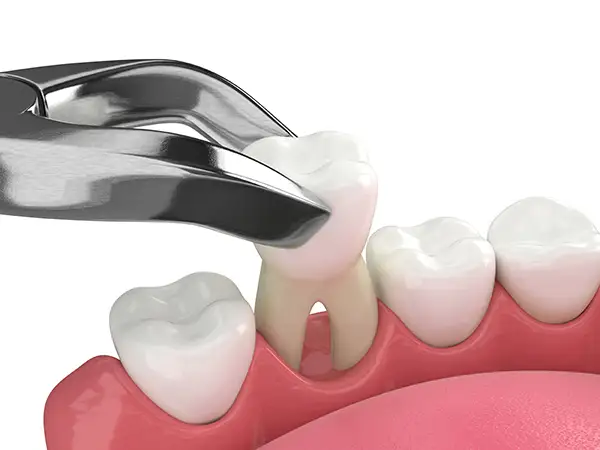
Types Of Tooth Extractions
Tooth extractions generally fall into two categories: simple and surgical. The type recommended depends on the condition of the tooth, its position in the jaw, and whether it has fully erupted through the gum tissue.
Simple
A simple extraction is performed when a tooth is fully visible above the gumline and can be removed without surgical access to the bone. These procedures are typically completed using specialized instruments that gently loosen the tooth before lifting it from its socket. Simple extractions are often recommended when:
-
- Severe decay has compromised the tooth structure
- Advanced gum disease has loosened the tooth
- A tooth is fractured beyond repair above the gumline
- Orthodontic treatment requires removal to create space
Because the tooth is accessible, the procedure is usually straightforward. Local anesthesia is used to ensure comfort, and the surrounding bone and soft tissue are preserved as much as possible. In many cases, patients are surprised at how quick and efficient a simple extraction can be.
Surgical
A surgical extraction is necessary when a tooth cannot be removed easily through simple means. This may occur if the tooth has broken at the gumline, has not fully erupted, or is positioned in a way that limits access. Surgical extractions are commonly used for impacted teeth. An impacted tooth is one that is trapped beneath the gum tissue or bone and cannot erupt normally. Wisdom teeth are frequently impacted, but other teeth can also be affected. Situations that may require a surgical extraction include:
- Impacted teeth beneath the gum or bone
- Teeth broken below the gumline
- Teeth with curved or complex roots
- Preparation for dental implant placement when roots must be carefully sectioned
During a surgical extraction, a small incision may be made in the gum tissue to access the tooth. In some cases, the tooth is sectioned into smaller pieces to allow for gentle removal. This controlled approach protects surrounding bone and reduces trauma to adjacent structures. At our Parker, CO specialty center, advanced imaging and detailed planning guide each surgical extraction, especially when future implant placement is being considered.
Reasons For Tooth Extractions
While preserving natural teeth is always the priority, there are circumstances when removal is the healthiest option. Prompt extraction can prevent more serious complications and protect neighboring teeth.
Severe Tooth Decay
When decay extends deep into the tooth and compromises the structural integrity beyond what a filling, crown, or root canal can restore, extraction may be necessary. Removing the damaged tooth eliminates infection and prepares the area for replacement options such as dental implants.
Advanced Periodontal Disease
Gum disease can gradually destroy the bone that supports your teeth. In advanced stages, teeth may become loose and uncomfortable. If the supporting structures are no longer stable, extraction can prevent ongoing bone loss and infection.
Infection Or Abscess
An untreated dental infection can spread beyond the tooth and affect surrounding tissues. When a tooth cannot be saved with endodontic treatment, removal stops the infection and reduces the risk of systemic complications.
Impacted Teeth
Impacted teeth may cause pain, swelling, jaw stiffness, or damage to adjacent teeth. Removing impacted teeth helps prevent cyst formation, infection, and crowding.
Orthodontic Or Restorative Planning
In some cases, teeth are removed to create a healthier, more functional bite. For example, overcrowding may interfere with orthodontic alignment, or a compromised tooth may prevent proper restorative treatment. Our prosthodontist carefully evaluates how extraction fits into the broader treatment plan.
Recovery After An Extraction
Healing after a tooth extraction is a gradual process that allows the body to repair bone and soft tissue. Most patients experience mild swelling and tenderness for a few days following the procedure. Clear post-operative instructions are provided to support smooth healing. Immediately after the extraction, a blood clot forms within the socket. This clot plays a critical role in protecting the bone and nerves underneath. Preserving it is essential for proper healing. Patients are advised to avoid vigorous rinsing, drinking through a straw, or smoking during the initial healing phase.
Typical recovery guidelines include:
- Resting and limiting strenuous activity for the first 24 hours
- Using cold compresses to manage swelling
- Eating soft foods while avoiding the surgical site
- Maintaining gentle oral hygiene to keep the area clean
Discomfort is usually manageable and improves steadily over several days. If sutures are placed, they may dissolve on their own or be removed at a follow-up visit. Complete healing of the soft tissue generally occurs within a few weeks, while the underlying bone continues to remodel over time. Because we specialize in implants and complex restorative care, we also discuss what comes next. In many cases, preserving bone volume is a priority. Bone grafting may be recommended at the time of extraction to maintain the ridge shape and support future implant placement. Addressing replacement options early helps protect your bite alignment and jaw health.
Protecting Your Oral Health
At Parker Dental Implant and Specialty Center extractions are never treated as routine procedures. Every patient receives a thorough evaluation, including digital imaging and a discussion of long-term goals. Our prosthodontic perspective ensures that the removal of a tooth supports the strength, function, and appearance of your smile moving forward. If you are experiencing tooth pain, swelling, or have been told you may need an extraction, we invite you to schedule a consultation. Early evaluation allows us to determine whether a tooth can be preserved or if removal is the most appropriate step. Contact our team today at (720) 522-2000 to receive thoughtful, specialized care designed to protect your oral health now and in the future.