Bone Grafting for Dental Implants Parker, CO
Your jaw does more than hold your teeth in place. It is a living structure that depends on the stimulation of tooth roots to stay dense and strong. When a tooth is lost, that stimulation disappears, and the bone beneath begins to shrink, a process that happens gradually but relentlessly. For patients considering dental implants, this bone loss is often already underway by the time they seek treatment at Parker Dental Implant and Specialty Center. Understanding what that means for your implant journey, and what can be done about it, is where bone grafting becomes an important part of the conversation.
What Is Bone Grafting for Dental Implants?
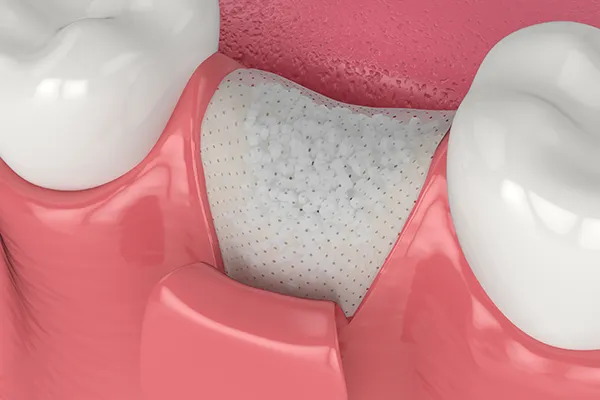
A bone graft is a procedure that rebuilds or reinforces the jawbone in areas where density or volume has been lost. Dental implants rely on the jawbone for support, anchoring into the bone much the way a natural tooth root does. If the bone is too thin, too shallow, or too compromised, it cannot provide the stable foundation an implant needs to integrate and function long-term. Bone grafting addresses this by introducing new bone material into the deficient area. Over time, this material fuses with your existing bone, creating a stronger, more substantial base capable of supporting an implant. Graft material can come from several sources, including processed donor bone, synthetic materials, or in some cases, bone taken from another area of your own body. Our prosthodontist, will determine which type is most appropriate based on your anatomy and the extent of rebuilding needed.
Does Every Patient Need a Bone Graft?
Not every implant patient requires bone grafting. Patients who pursue implant treatment relatively soon after tooth loss, and who had healthy bone structure to begin with, may have sufficient jawbone to proceed directly to implant placement. A thorough evaluation, including cone beam imaging that provides a three-dimensional view of your jaw, will reveal exactly how much bone is present and whether grafting is necessary. That said, bone grafting is a very common part of implant treatment. Patients who have been missing teeth for an extended period, those who experienced bone loss due to gum disease, or individuals who had teeth removed due to infection or trauma are among those most likely to need it. In some cases, a small graft can be placed at the same time as the implant. In others, more significant rebuilding must be completed and fully healed before implant placement can occur.
Who Is Most Likely to Need Bone Grafting?
Several factors increase the likelihood that a patient will need a bone graft. Prolonged tooth loss is one of the most significant. The jawbone begins resorbing within months of losing a tooth, and the longer the gap goes unfilled, the more bone is typically lost. Patients with a history of periodontitis, the advanced stage of gum disease, are also frequent candidates. Periodontitis actively destroys the bone that supports teeth, often leaving behind significant deficiencies by the time teeth are removed or lost on their own. Those who have worn dentures for many years may also experience considerable bone loss over time, since dentures do not stimulate the jaw the way natural tooth roots do. Certain medical conditions, previous trauma, or the specific anatomy of the extraction site itself can also influence whether grafting is recommended.
What Happens During the Bone Grafting Procedure?
Bone grafting is performed with local anesthesia, and sedation options are available for patients who prefer a more relaxed experience. The procedure involves making a small incision in the gum tissue to expose the area of the jaw being treated. The graft material is then placed and secured, the tissue is repositioned, and the site is sutured closed. The procedure itself is typically straightforward and well-tolerated. Most patients are surprised by how manageable it is, both during and after. Mild swelling, tenderness, and some bruising in the days following are normal and generally resolve within one to two weeks.
How Long Is the Recovery Before Getting Dental Implants?
After bone grafting, the graft material needs time to integrate with your existing bone, a biological process known as osseointegration. Depending on the size and location of the graft, this healing period generally ranges from three to six months, though some cases may require additional time. During this healing phase, we will monitor progress with periodic imaging to confirm that the graft is maturing as expected. Once sufficient integration has occurred, implant placement can move forward on solid footing.
Is Bone Grafting Painful?
Most patients report that bone grafting is more comfortable than they anticipated. During the procedure, local anesthesia keeps the area completely numb. Afterward, any discomfort is typically mild and well-managed with over-the-counter pain relievers. Significant soreness usually subsides within the first few days. Following your post-operative care instructions, including any dietary modifications and keeping the surgical site clean, plays a meaningful role in how smoothly your recovery goes and how well the graft takes.
How Bone Grafting Supports Your Long-Term Implant Results
The goal of bone grafting is not simply to make implant placement possible. It is to ensure that once your implant is placed, it has the structural environment it needs to last. An implant placed in well-developed bone integrates more reliably and is better positioned to withstand the daily demands of chewing and speaking over time. When your jaw has the density and volume to properly anchor an implant, the entire restoration benefits, from the stability of the implant post to the natural appearance and function of the final crown.
Schedule a Consultation
If you have been missing one or more teeth, or if you have been told in the past that you may not have enough bone for implants, we encourage you to come in for a consultation. Our prosthodontist in Parker has the specialized training to evaluate your jaw, develop a personalized treatment plan, and guide you through every step of the process. Bone loss does not have to close the door on implants. With the right preparation, a strong and lasting restoration is well within reach. Contact today at (720) 549-8864 to get started.