Gum Grafting and Soft Tissue Reconstruction Parker, CO
Your gums form a protective seal around your teeth and dental implants, shield the underlying bone from bacteria, and help anchor everything in place. When that tissue is lost, thinned, or damaged, the consequences extend well beyond appearance. Gum grafting and soft tissue reconstruction are procedures we perform at Parker Dental Implant and Specialty Center. These procedures are designed to restore what recession takes away, and for patients in Parker, CO, and the surrounding areas, these treatments are often a critical step in achieving lasting oral health.
What Is Gum Grafting?
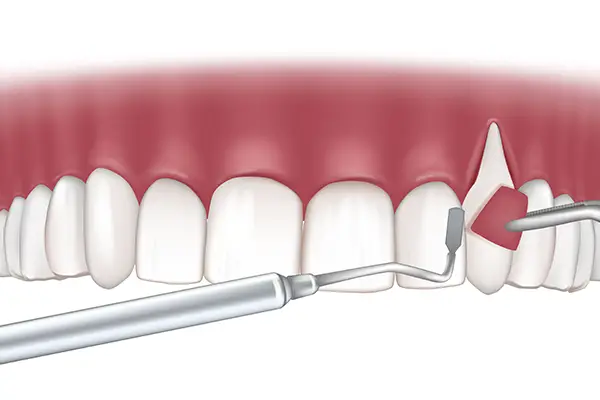
Gum grafting is a surgical procedure that adds new tissue to areas where the gum line has receded or where there is insufficient gum tissue to adequately protect the teeth or supporting structures. The goal of gum grafting is to rebuild that protective barrier, improve tissue thickness and stability, and, in many cases, reduce sensitivity caused by exposed root surfaces. There are several types of gum grafts that can be used; the graft chosen depends on the patient’s needs. A connective tissue graft, the most common type, involves taking tissue from beneath a small flap in the roof of the mouth and placing it at the graft site. A free gingival graft uses a thin layer of tissue directly from the palate and is often recommended for patients with very thin gum tissue. A pedicle graft, used when there is adequate tissue nearby, involves rotating or sliding adjacent gum tissue to cover the area of concern rather than harvesting from the palate.
What Is Soft Tissue Reconstruction?
Soft tissue reconstruction is a broader term that refers to reshaping, augmenting, or rebuilding the gum tissue around teeth, dental implants, or extraction sites. While gum grafting is one component of this, soft tissue reconstruction can also include procedures that refine gum contours following tooth loss, prepare a site for implant placement, or improve tissue volume and architecture around existing implants. For patients receiving dental implants, proper soft tissue support is essential to long-term success. Without adequate keratinized gum tissue around an implant, the area becomes more susceptible to inflammation and bone loss over time.
When Are These Procedures Needed?
Gum recession is the most common reason these procedures are recommended. Recession can result from aggressive brushing habits, periodontal disease, tooth position, thin gum tissue by nature, or the long-term effects of teeth grinding (bruxism). In some cases, recession develops gradually and without pain, which is why it often goes unnoticed until significant tissue loss has occurred. Patients are typically candidates for gum grafting or soft tissue reconstruction when they experience root sensitivity, visible root exposure, increasing recession measurements at dental visits, or when gum tissue is too thin to support restorative treatment. Those planning to receive dental implants may also need soft tissue work beforehand or alongside placement to ensure there is enough healthy, stable tissue to support the final restoration.
How These Procedures Support Other Dental Treatments
Soft tissue health is interconnected with nearly every restorative and cosmetic procedure. Before dental implants are placed, adequate bone and gum tissue must be present to support them properly. When tissue volume is insufficient, grafting may be performed at the time of extraction to preserve the site, prior to implant placement as a preparatory step, or around an existing implant that shows signs of tissue deficiency. For patients receiving crowns, veneers, or other restorations, consistent and healthy gum margins contribute to the final esthetic result and help protect the margins of the restoration from bacterial exposure. Soft tissue reconstruction can also improve symmetry in the gum line before cosmetic work begins, creating a more uniform foundation.
Is Gum Grafting Painful?
This is one of the most common questions patients ask before scheduling this procedure. Local anesthesia is used throughout the procedure, so patients do not feel pain during treatment. Sedation options are often available for those who prefer additional comfort. Post-operative discomfort is typically described as mild to moderate soreness at the graft site and, if a palatal harvest was used, at the roof of the mouth as well. Prescribed or over-the-counter pain management and careful dietary adjustments during the initial healing period help most patients manage this phase without significant difficulty.
Is This a One-Time Procedure?
For many patients, a single grafting procedure addresses the area of concern effectively. However, in cases of generalized recession across multiple teeth, treatment may be staged across more than one appointment to allow for proper healing and predictable outcomes. Patients who have experienced recession due to an ongoing cause, such as untreated teeth grinding or inadequate oral hygiene, may need additional treatment in the future if those underlying factors are not managed. Following the procedure, maintaining proper brushing technique and attending regular periodontal maintenance appointments significantly reduces the likelihood of further recession.
What to Expect During Recovery
Most patients return to light daily activity within a day or two following surgery. The initial healing phase, during which the new tissue integrates and soreness gradually resolves, typically spans one to two weeks. Patients are advised to follow a soft food diet, avoid strenuous activity in the first several days, and refrain from disturbing the surgical site with their fingers, tongue, or a toothbrush until cleared to do so. Swelling and minor bruising are normal and generally subside within the first week. Complete tissue maturation and full integration of the graft takes several months, with follow-up appointments scheduled to monitor progress throughout.
Take the Next Step Toward Healthier Gum Tissue
Receding gums do not improve on their own. If you have noticed sensitivity, visible root surfaces, or been told your gum tissue is thinning, an evaluation with our prosthodontist at Parker Dental Implant and Specialty Center in Parker, CO, can help determine whether gum grafting or soft tissue reconstruction is appropriate for you. Contact our office at (720) 522-2000 to schedule a consultation and learn how restoring your gum tissue can protect your long-term oral health.