
3D Cone Beam CT (CBCT) Imaging Parker, CO
In a field where precision determines long-term success, advanced imaging plays a central role in delivering predictable results. At Parker Dental Implant and Specialty Center, we rely on technology that allows us to see far beyond what traditional dental X-rays can reveal. When planning dental implants, complex restorations, or diagnosing underlying concerns, detailed visualization of the teeth, bone, nerves, and surrounding structures is essential. One of the most valuable tools we use is 3D Cone Beam CT, also known as CBCT imaging. This advanced diagnostic system provides comprehensive, three-dimensional views of your oral anatomy, allowing our prosthodontist to plan treatments with exceptional accuracy and confidence.
What Is 3D Cone Beam CT (CBCT) Imaging?
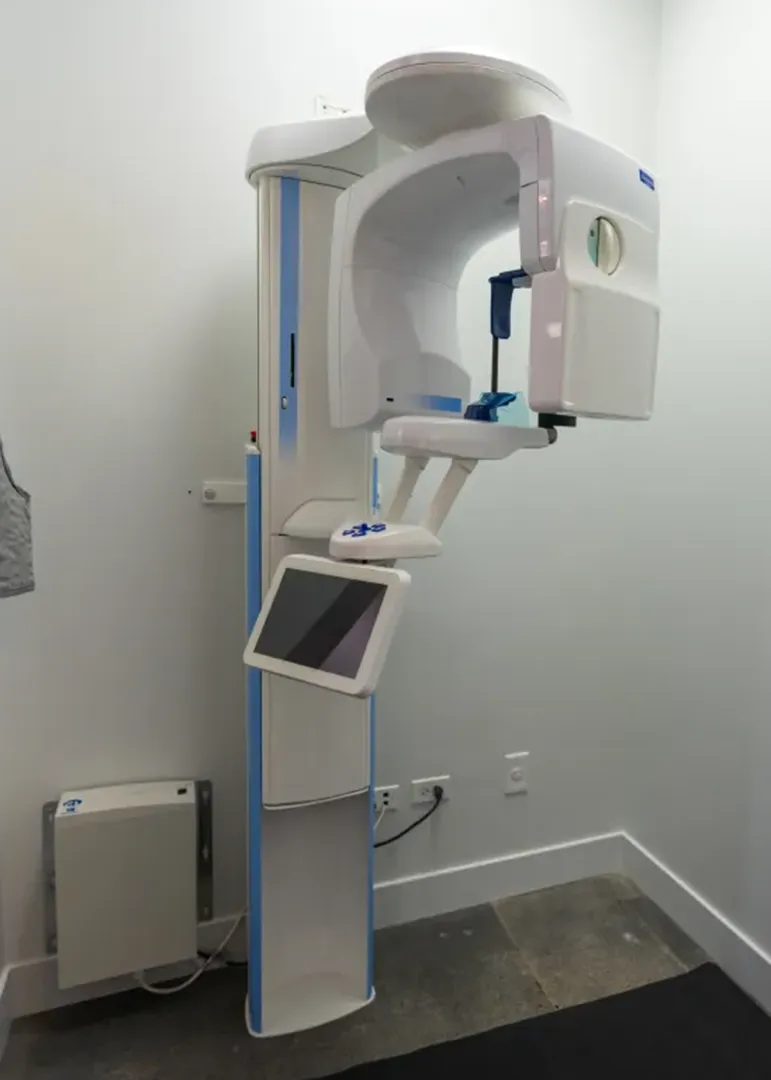
3D Cone Beam CT imaging is a specialized type of computed tomography designed specifically for dental and maxillofacial applications. Unlike traditional two-dimensional X-rays, CBCT captures a full three-dimensional image of your teeth, jawbone, soft tissues, nerve pathways, and sinuses in a single scan. The system uses a cone-shaped X-ray beam that rotates around your head, collecting hundreds of images in a short period of time. These images are then reconstructed into a highly detailed 3D model. This allows our prosthodontist to examine your oral structures from multiple angles, measure bone density and volume, and evaluate spatial relationships with remarkable precision. Because it is designed specifically for dentistry, CBCT imaging offers detailed views of areas that standard radiographs may not fully capture.
When Is It Used?
CBCT imaging is typically recommended when a more comprehensive evaluation is necessary. While routine dental X-rays are sufficient for many general concerns, advanced procedures require more detailed information. Common situations where CBCT is used include:
| • | Dental implant planning |
| • | Evaluation of bone loss |
| • | Assessment of impacted teeth |
| • | Diagnosis of jaw abnormalities |
| • | Pre-surgical planning for extractions or grafting |
| • | Complex restorative cases |
In implant dentistry, understanding the exact height, width, and density of available bone is critical. CBCT provides this information clearly and accurately. It also identifies the precise location of important anatomical structures, such as nerves and sinus cavities, helping reduce surgical risks.
How Does It Help With Dental Implants And Restorations?
Dental implants require careful placement to ensure long-term stability, function, and esthetics. CBCT imaging allows us to plan implant placement with exact measurements before any procedure begins. With a three-dimensional model of your jaw, our prosthodontist can:
| • | Determine ideal implant positioning |
| • | Evaluate bone volume and density |
| • | Identify nerve pathways to avoid complications |
| • | Assess sinus proximity for upper jaw implants |
| • | Plan for bone grafting when necessary |
This level of detail supports a more precise surgical approach. It also improves communication with patients by allowing us to visually explain findings and treatment plans using 3D images. Beyond implants, CBCT imaging is valuable for designing crowns, bridges, implant-supported restorations, and full-arch reconstructions. When restoring multiple teeth or rebuilding significant portions of the bite, understanding the underlying bone structure is essential. The clarity provided by CBCT contributes to restorations that fit properly and function harmoniously with surrounding teeth.
Improving Accuracy And Predictability
Advanced imaging reduces guesswork. By visualizing the treatment area in three dimensions, we can anticipate potential challenges before beginning care. For example, variations in bone shape or hidden anatomical features may not appear on a traditional X-ray. With CBCT, these details are visible during the planning phase rather than discovered during treatment. This foresight allows us to create a more predictable and efficient process.
Supporting Bone Grafting And Sinus Evaluation
In some cases, patients may not initially have enough bone to support dental implants. CBCT imaging plays a vital role in evaluating bone deficiencies and planning grafting procedures. By measuring bone dimensions accurately, we can determine whether grafting is necessary and identify the most appropriate approach. For implants in the upper back jaw, CBCT also allows detailed evaluation of the sinus cavity. Understanding sinus anatomy is especially important when planning sinus lift procedures or placing implants in areas close to the sinus floor. This level of assessment supports safer and more effective treatment planning.
Enhanced Diagnosis Of Complex Conditions
Beyond restorative applications, CBCT imaging assists in diagnosing a range of dental and jaw-related conditions. These may include cysts, infections, temporomandibular joint concerns, and impacted teeth. Three-dimensional visualization allows our prosthodontist to examine areas that might otherwise remain unclear. This comprehensive perspective contributes to earlier detection and more informed decision-making. When patients experience unexplained discomfort or complex dental issues, CBCT imaging often provides clarity that guides the next steps in care.
Patient Experience During a CBCT Scan
Many patients are surprised by how quick and comfortable a CBCT scan is. The process is simple and noninvasive. You will stand or sit while the scanner rotates around your head for a brief period, typically under a minute. There is no need for impressions or physical molds, and the scan does not require recovery time. Once completed, the images are available almost immediately for review. Because the scan is completed in a single rotation, it is efficient while still delivering detailed results.
Radiation and Safety Considerations
Radiation exposure is an important consideration in any diagnostic imaging. CBCT systems used in dental practices are designed to focus specifically on the area of interest, limiting unnecessary exposure. Compared to traditional medical CT scans, dental CBCT imaging generally involves significantly lower radiation levels. At our Parker Dental Implant and Specialty Center implant and specialty center, we recommend CBCT only when the additional information is necessary to support accurate diagnosis or treatment planning.
Integration with Digital Treatment Planning
Modern dentistry increasingly relies on digital workflows. CBCT imaging integrates seamlessly with digital impressions and planning software. This combination allows us to simulate implant placement, design restorations, and evaluate bite relationships before treatment begins. For complex cases involving multiple implants or full-arch restorations, digital planning enhances coordination and efficiency. It allows our prosthodontist to visualize the final outcome while mapping out each step of the process. The result is a thoughtful, well-organized treatment plan grounded in precise data.
Why Advanced Imaging Matters In Prosthodontics
Prosthodontics focuses on restoring and replacing teeth in ways that support both function and esthetics. Achieving these goals requires a deep understanding of oral anatomy and biomechanics. CBCT imaging provides insight into bone structure, alignment, and spatial relationships that influence long-term success. Whether planning a single implant crown or a comprehensive reconstruction, detailed imaging strengthens the foundation of every decision we make.
Schedule A Consultation In Parker, CO
When advanced imaging is indicated, 3D Cone Beam CT allows us to plan care with clarity and precision. By combining clinical expertise with modern technology, we can evaluate your oral health thoroughly and recommend solutions that align with your needs. If you are considering dental implants or complex restorative treatment, we invite you to schedule a consultation at by calling (720) 522-2000. Our prosthodontist will determine whether CBCT imaging is appropriate and explain how it supports your treatment plan. Comprehensive evaluation is the first step toward restoring comfort, function, and confidence in your smile.