Have you ever wondered why some dental treatments focus on saving as much of your natural tooth as possible, while others involve placing crowns or doing more extensive repairs? If you've heard the phrase "biomimetic vs traditional dentistry," you may be curious about what it actually means for your smile.
At Parker Dental Implant & Specialty Center in Parker, we talk with patients about both approaches to dental care. Dr. Isra Ahmed often explains that the biggest difference comes down to how much of your natural tooth structure we can keep.
Both biomimetic dentistry and traditional dentistry can restore damaged teeth. The choice depends on the condition of your tooth and the long-term health of your smile. Understanding these approaches helps you make informed decisions about your oral health.

Biomimetic vs traditional dentistry: what's the difference?
When patients ask about biomimetic vs traditional dentistry, the simplest answer involves how much of the tooth remains after treatment.
Traditional dentistry often removes damaged areas and then protects the tooth with traditional crowns or other restorations. In many cases, this approach works well and protects the tooth long term.
Biomimetic dentistry, however, focuses on preserving natural tooth structure whenever possible. Instead of preparing the tooth for a large crown, biomimetic dentists rebuild the tooth in layers using advanced adhesives and restorative materials.
The goal is to replicate the natural properties of teeth so the restored tooth behaves more like the original.
What is biomimetic dentistry?
Biomimetic dentistry is a philosophy of restorative dentistry that aims to mimic the natural function of teeth. The word "biomimetic" literally means "mimicking nature."
This approach uses advanced materials, composite resins, and adhesive dentistry to rebuild damaged teeth.
Biomimetic dentistry focuses on:
-
Preserving healthy tooth structure
-
Using bonded restorations instead of mechanical retention
-
Supporting the natural flexibility of teeth
Because biomimetic techniques focus on conservation, they often involve minimally invasive procedures.
At Parker Dental Implant & Specialty Center in Parker, Dr. Isra Ahmed evaluates whether this conservative approach can provide the most predictable long-term outcome.
What is traditional dentistry?
Traditional dentistry focuses on restoring teeth using established restorative techniques. Many dental schools teach these methods as standard approaches to dental care.
Traditional methods may involve:
-
Removing damaged tooth structure
-
Preparing the tooth for crowns
-
Using mechanical retention to secure restorations
In cases where a tooth has significant damage or decay, traditional dentistry may require root canal treatment or a crown to protect it.
These treatments remain effective solutions when teeth require strong reinforcement.
Why does preserving natural tooth structure matter?
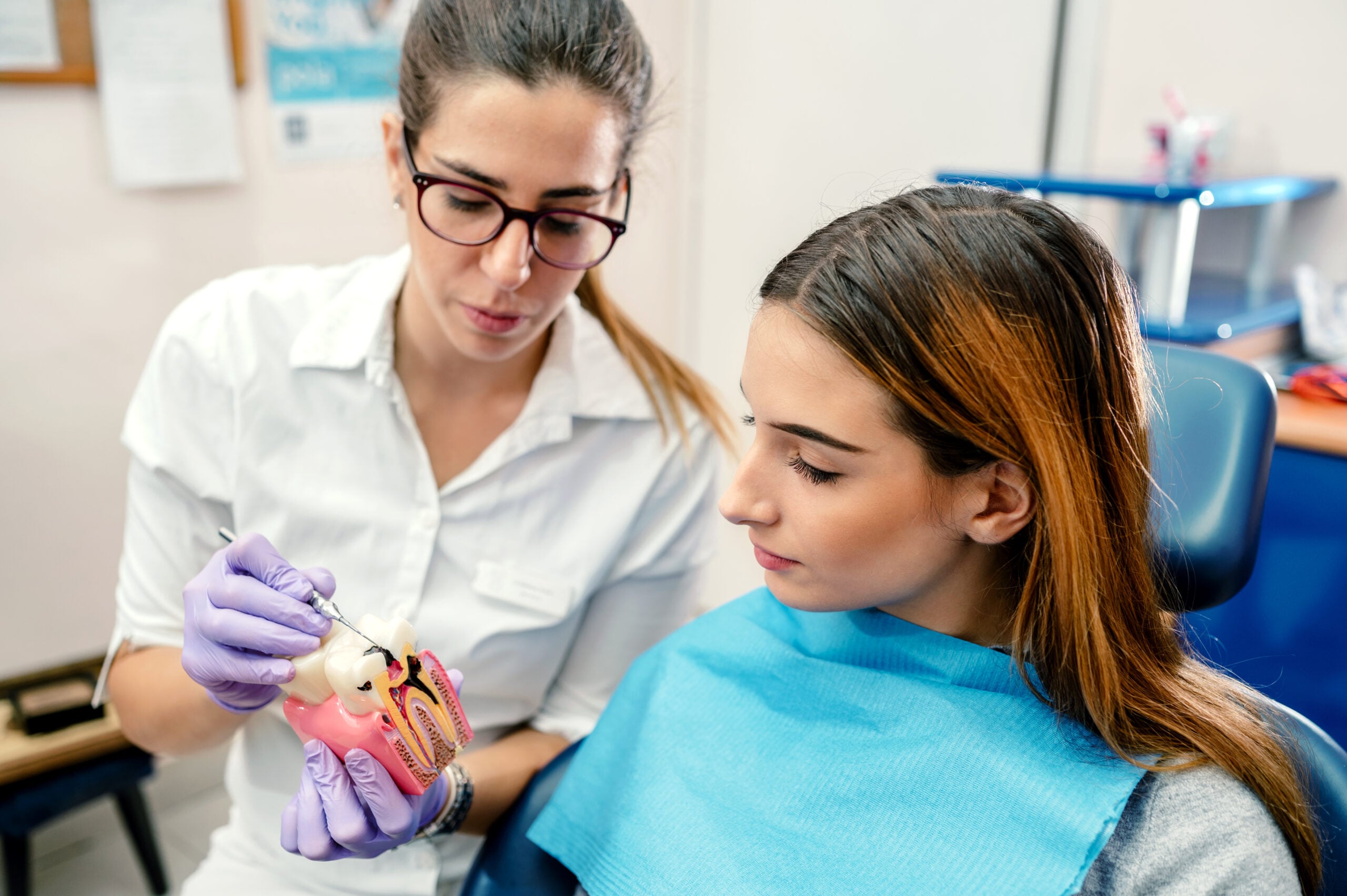
Your natural teeth are stronger than any artificial material. When dentists preserve natural tooth structure, the tooth often maintains better long-term strength.
Biomimetic dentistry prioritizes preserving natural tooth tissue. By conserving as much tooth structure as possible, dentists can maintain the tooth's structural integrity.
When too much structure is removed, teeth may require more invasive treatments later. Protecting healthy tooth structure often helps prevent future dental issues.
This conservative philosophy supports long-term dental health.
How does biomimetic dentistry repair damaged teeth?
When teeth suffer from tooth decay or fractures, biomimetic dentists rebuild them using layered restorative materials.
These materials include advanced adhesives and composite resins designed to bond directly to the tooth.
This process helps create a restored tooth that behaves similarly to a natural tooth.
Instead of placing large crowns, biomimetic restorations rebuild the damaged area while maintaining much of the natural structure.
These biomimetic restorations often absorb chewing forces more naturally than traditional restorations.
Do biomimetic techniques reduce the need for root canals?
In some cases, biomimetic techniques reduce the likelihood of needing root canals.
By sealing cracks and reinforcing the remaining tooth structure, biomimetic dentists may prevent damage from spreading deeper into the tooth.
However, root canals are still necessary when infection reaches the pulp of the tooth.
Both biomimetic dentistry and traditional dentistry recognize that each case is unique. The best treatment depends on how much remaining tooth structure exists and the extent of damage.
When are traditional dental treatments still necessary?
Even though biomimetic dentistry focuses on preserving natural teeth, there are times when traditional dentistry remains the best option.
For example, teeth with severe damage may require:
-
Traditional crowns
-
Root canal treatment
-
Dental implants
In these situations, traditional restorations provide strength and durability.
At Parker Dental Implant & Specialty Center in Parker, Dr. Isra Ahmed evaluates the condition of your tooth before recommending a solution.
What materials are used in biomimetic restorations?
Biomimetic dentistry uses advanced materials designed to mimic the mechanical properties of natural teeth.
Common materials include:
-
Composite resins
-
Bonded porcelain restorations
-
Advanced adhesives
These materials support the tooth and distribute chewing forces more evenly.
This approach allows biomimetic dentistry to replicate the natural flexibility of enamel and dentin.
How does biomimetic dentistry compare with holistic dentistry?
Some patients compare biomimetic dentistry vs holistic dentistry because both approaches emphasize conservative treatment.
However, the main focus of biomimetic dentistry is mechanical function. Biomimetic dentistry replicates the natural structure and behavior of teeth.
Holistic dentistry may focus more on whole-body health considerations.
Both approaches share a goal of protecting oral health and minimizing the need for invasive techniques.
What are the benefits of biomimetic dentistry?
Biomimetic dentistry offers several advantages when appropriate.
Key benefits include:
-
Preserving natural tooth structure
-
Supporting long-term tooth strength
-
Using minimally invasive techniques
These treatments aim to restore teeth while protecting their natural function.
For many patients, biomimetic dentistry offers a more conservative path to repairing damaged teeth.
How does biomimetic dentistry support long-term dental health?
Because biomimetic dentistry prioritizes preserving natural structure, it may reduce the need for more invasive treatments later.
When dentists conserve tooth structure, they maintain the tooth's natural strength and flexibility.
This approach often helps protect oral health care over time.
Maintaining healthy tissue and protecting enamel supports long-term dental health.
How does a dentist decide between these approaches?
Choosing between biomimetic and traditional dentistry depends on several factors.
An experienced dentist evaluates:
-
The amount of remaining tooth structure
-
The patient's bite force
-
Long-term stability of the restoration
At Parker Dental Implant & Specialty Center in Parker, Dr. Isra Ahmed considers the entire picture when recommending treatment.
Finding the right solution for your smile
So, when considering biomimetic vs traditional dentistry, the right choice depends on your tooth condition and long-term goals.
Biomimetic dentistry offers a conservative approach that focuses on preserving natural teeth whenever possible. Traditional dentistry provides reliable solutions when teeth require stronger reinforcement.
At Parker Dental Implant & Specialty Center, Dr. Isra Ahmed helps patients evaluate both options carefully.
If you're wondering whether a conservative approach could work for your smile, schedule a consultation at our dental office in Parker. Our team will examine your tooth and recommend the most predictable treatment.
What questions do you have about preserving natural teeth? Would you prefer a minimally invasive approach when possible? Share your thoughts in the comments below.
Key takeaways
-
Biomimetic dentistry focuses on preserving natural tooth structure
-
Traditional dentistry may involve crowns or root canals for damaged teeth
-
Biomimetic techniques use advanced adhesives and composite resins
-
Conservative treatment helps maintain natural teeth and oral health
-
The best approach depends on the condition of your tooth