
Have you been told you may need full arch dental implants, but are unsure which option is right for you? Are you wondering whether All-on-4 or All-on-6 dental implants will give you the most reliable long-term result?
At Parker Dental Implant & Specialty Center in Parker, many people arrive with these same questions. They want to understand how dental implants work and which option will give them the most predictable outcome.
Patients want clear answers before committing to treatment, and that's exactly what Dr. Isra Ahmed provides.
Both approaches restore a full arch of replacement teeth supported by dental implants. The real difference often comes down to your bone density, your bite, and how the final teeth are designed to function long term.
Understanding these differences can help you make a confident decision about your smile.
All-on-4 or All-on-6 dental implants: what's the real difference?
When comparing All-on-4 or All-on-6 dental implants, the main difference lies in how many implants support a full arch of teeth.
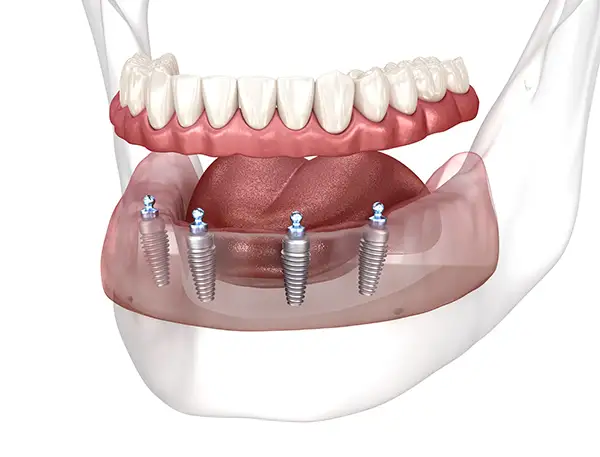
All-on-4 uses 4 dental implants to support a full arch of fixed teeth.
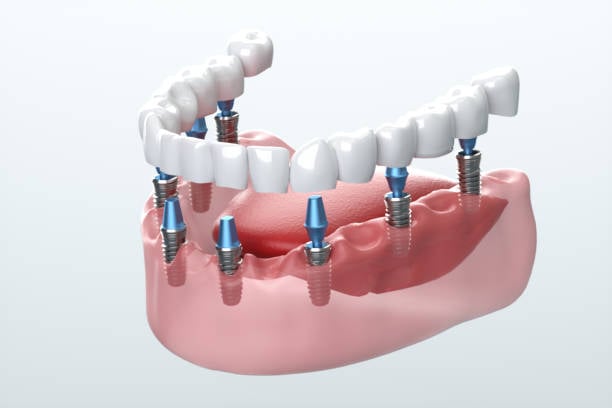
All-on-6 uses 6 dental implants to support that same arch.
Both solutions restore missing teeth with prosthetic teeth that function similarly to natural teeth.
Here is a quick comparison.
| Feature | All-on-4 | All-on-6 |
|---|---|---|
| Number of implants | Four implants | Six implants |
| Implant distribution | Angled back implants | Even distribution |
| Bone requirements | Works with lower bone density | Requires more bone support |
| Bite support | Strong support | Extra support |
At Parker Dental Implant & Specialty Center, Dr. Isra Ahmed evaluates your bone structure, bite forces, and bone density to determine the best approach.
Why do some patients need 4 dental implants instead of six implants?
Many patients are surprised that 4 dental implants can support an entire arch of teeth.
The reason lies in how the implants are placed.
In an All-on-4 approach, the back implants are angled into stronger areas of the jaw. These angled back implants allow dentists to avoid areas where bone loss may have occurred.
This technique means the treatment can often succeed with fewer implants.
Benefits of using four implants
-
Shorter treatment time
-
Fewer surgical procedures
-
Less need for bone grafting
-
Ability to receive same-day temporary teeth
For patients with lower bone density, this option can provide a reliable solution.
What happens during the placement of a full-arch implant?
The process begins with a detailed evaluation of your oral health and jaw structure.
Step-by-step overview of the implant process
-
Digital scans evaluate bone density and bone structure
-
A personalized treatment plan determines ideal implant placement
-
Titanium implants are placed during implant surgery
-
Temporary teeth or a temporary bridge may be attached the same day
-
Healing allows implants to fuse with the jawbone
During healing, a process called osseointegration occurs. This process allows the implants to bond with bone and create a stable base for fixed teeth.
Once healing is complete, permanent prosthetic teeth are placed to complete the full arch restoration.
Are dental implants stronger with six implants?
Some patients assume that more implants automatically produce stronger results.
While that is not always the case, 6 dental implants can provide extra support for certain patients.
With six implants, the bite force spreads more evenly across the full arch.
Advantages of additional implants
-
Improved chewing function
-
Increased bone support
-
Reduced risk of implant failure
-
Greater stability for fixed teeth
Patients with strong bone density often benefit from this approach.
Do I need bone grafting for All-on-4 or All-on-6 dental implants?
Many patients worry that implant treatment will require bone grafting.
When teeth have been missing for years, the jawbone can shrink. This bone loss reduces the amount of bone available for implants.
All-on-4 may avoid bone grafting because implants are angled into stronger bone areas.
All-on-6 may require additional procedures.
Procedures that may increase bone support
-
Bone grafting
-
Sinus lift
-
Additional procedures to rebuild bone volume
These procedures help create the bone support needed for six implants.
How does bone density affect All-on-4 vs All-on-6 dental implants?
Your bone density plays a major role in choosing the right implant system.
Patients with lower bone density often benefit from strategically placed 4 dental implants.
Patients with stronger bone structure may support 6 dental implants or even additional implants for greater stability.
Factors evaluated during consultation
-
Bone height
-
Bone volume
-
Jaw structure
-
Bite pressure
These factors determine how well implants can support a full arch.
Will my new teeth feel like real teeth?
A common question patients ask is whether implant-supported teeth will feel natural.
Once implants heal, they act much like the roots of natural teeth.
Because implants fuse with bone, they provide stable support for fixed teeth.
Benefits patients notice after treatment
-
Natural chewing strength
-
Improved speech
-
Greater stability than dentures
-
Stronger bite force
Many patients say their new smile feels surprisingly similar to having real teeth again.
What is the treatment time for full arch implants?
The total treatment time depends on your bone density, oral health, and whether bone grafting is required.
Typical treatment timeline
| Step | Timeline |
|---|---|
| Consultation and planning | One visit |
| Implant surgery | Same day |
| Temporary teeth placement | Same day |
| Healing period | Three to six months |
| Final teeth placement | After healing |
Because patients often receive same-day temporary teeth, they rarely leave the office without a smile.
Are dental implants safer than traditional methods?
Compared with traditional methods such as removable dentures, dental implants offer several advantages.
Long-term benefits of implant treatment
-
Preserve bone structure
-
Maintain facial support
-
Improve chewing ability
-
Reduce risk of future dental problems
Because implants stimulate the jawbone, they help slow the bone loss that typically follows tooth loss.
What happens if dental implants fail?
Although rare, implant failure can occur.
Possible causes include infection, smoking, or insufficient bone density.
Factors that reduce implant risk
-
Careful treatment planning
-
Accurate implant placement
-
Healthy oral hygiene habits
-
Regular dental checkups
At Parker Dental Implant & Specialty Center, Dr. Isra Ahmed carefully designs every treatment plan to maximize long-term success.
Can All-on-4 or All-on-6 dental implants replace all missing teeth?
Yes. Both treatment systems restore an entire arch of teeth.
Implants provide a stable solution for replacing missing teeth and restoring oral function.
Improvements patients often experience
-
Clearer speech
-
Stronger chewing ability
-
Improved facial balance
-
Greater smile confidence
For many patients, this treatment creates a completely new smile.
How to think about All-on-4 vs All-on-6 dental implants.
If you are deciding between All-on-4 vs All-on-6 dental implants, the number of implants is only one factor.
The better choice depends on several factors.
-
Bone density
-
Bite forces
-
Overall oral health
-
Design of the final teeth
At Parker Dental Implant & Specialty Center in Parker, Dr. Isra Ahmed evaluates each of these details carefully.
The goal is always the same. Create a stable solution that restores confidence and chewing function for years to come.
If you would like clarity before making a decision, schedule a free consultation at our Parker office. We will review your scans, discuss your options, and help you determine the right path toward your new smile.
Still deciding between All-on-4 and All-on-6 dental implants? What questions do you have about the procedure, recovery, or results? Share them in the comments, and we will be happy to help guide you.
Key takeaways.
-
All-on-4 uses four implants to support a full arch of teeth
-
All-on-6 uses six implants for additional stability
-
Bone density plays a major role in determining the best option
-
Both systems restore fixed teeth and natural chewing ability